Understanding and managing your blood pressure is crucial for overall health, and the Lloyds Pharmacy Blood Pressure Monitor empowers you to proactively monitor this vital sign conveniently at home․
This user manual provides comprehensive guidance on setting up, using, and interpreting readings from your new monitor, ensuring accurate and reliable results for informed healthcare decisions․
The following sections detail everything from initial setup and proper technique to understanding your results and maintaining your device, all based on the provided documentation․
What is a Blood Pressure Monitor and Why Use One?
A blood pressure monitor, like the Lloyds Pharmacy model, is a medical device designed to measure the force of your blood against the artery walls as your heart beats (systolic pressure) and between beats (diastolic pressure)․ Regular monitoring allows for early detection of hypertension, commonly known as high blood pressure, or hypotension, which is low blood pressure․
Why is home monitoring important? Clinic readings can sometimes be elevated due to “white coat hypertension,” a temporary increase caused by anxiety in a medical setting․ Consistent home measurements provide a more accurate reflection of your typical blood pressure levels․
This proactive approach enables you and your healthcare provider to track changes, assess treatment effectiveness, and make informed decisions about your cardiovascular health; Early detection and management can significantly reduce the risk of serious health complications like heart disease, stroke, and kidney problems․
The Lloyds Pharmacy Blood Pressure Monitor: An Overview
The Lloyds Pharmacy Blood Pressure Monitor is a clinically validated device designed for simple and accurate home blood pressure measurement․ It features an oscillometric method, meaning it detects blood flow changes to determine your blood pressure without invasive procedures․
Key features include a clear LCD display showing systolic and diastolic readings, pulse rate, and date/time․ The monitor incorporates a memory function to store previous readings, allowing you to track trends over time․ Multiple user profiles are available, enabling different family members to record their data separately․
This model is intended for non-invasive use only and is not a substitute for regular check-ups with your healthcare provider․ It’s designed for ease of use, providing reliable data to support proactive health management․ Refer to the included manual for detailed instructions and safety precautions․
Setting Up Your Monitor
Proper setup is essential for accurate readings․ This section guides you through unboxing, battery installation, cuff attachment, and selecting the correct cuff size for optimal performance․
Unboxing and Component Check
Carefully remove the Lloyds Pharmacy Blood Pressure Monitor and all included accessories from the packaging․ It’s important to verify that all components are present and undamaged before proceeding․ Your package should contain the blood pressure monitor unit itself, a cuff (size may vary), and this user manual․
Inspect the monitor for any visible signs of damage, such as cracks or broken parts․ Check the cuff for tears or holes․ Ensure the connecting tube is securely attached to both the cuff and the monitor․ If any components are missing or appear damaged, do not use the device and contact customer support immediately․
Familiarize yourself with the different parts of the monitor, including the power button, start/stop button, display screen, and cuff connector․ Retain the packaging for potential future use, such as storage or returns․
Installing Batteries
To power the Lloyds Pharmacy Blood Pressure Monitor, you will need to install batteries․ Typically, the monitor requires four 1․5V alkaline batteries (AA size)․ Locate the battery compartment, usually on the back or bottom of the unit․ Gently slide open the battery cover․
Insert the batteries according to the polarity markings (+ and -) inside the compartment․ Ensure the batteries are correctly aligned to make proper contact․ Once the batteries are in place, close the battery cover securely until it clicks․
A battery indicator will appear on the display screen when you power on the monitor, confirming successful installation․ Replace batteries when the low battery indicator appears to ensure accurate readings․ Do not mix old and new batteries, or different types of batteries․
Attaching the Cuff Correctly
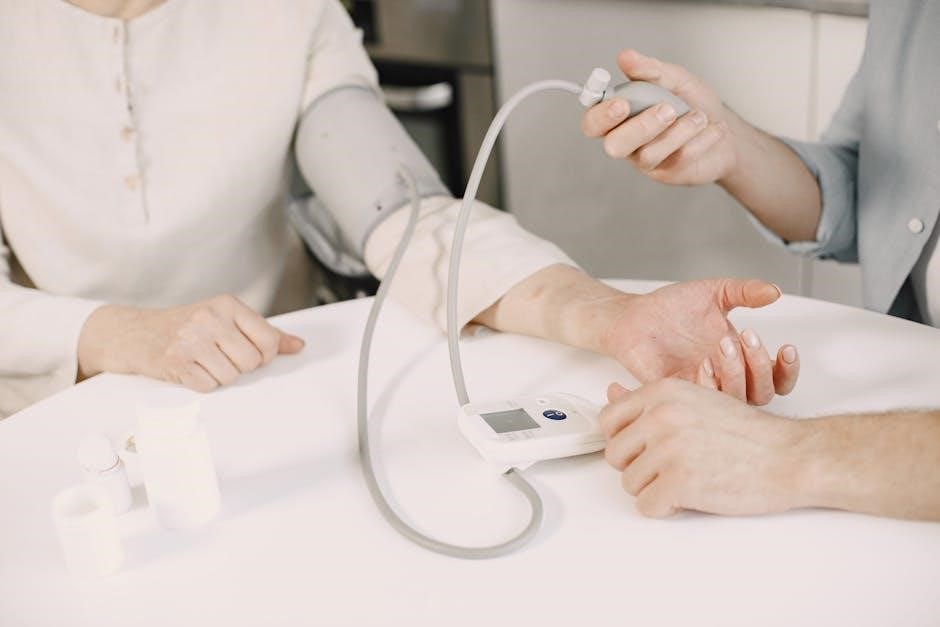
Proper cuff attachment is vital for accurate blood pressure readings․ Unroll the cuff completely and ensure the artery marker (usually an arrow) on the cuff aligns with the brachial artery, located on the inner side of your upper arm․
Position the cuff approximately 1-2 centimeters (about an inch) above your elbow․ Wrap the cuff snugly around your arm, ensuring it’s not too tight or too loose․ The lower edge of the cuff should be above the elbow bend․
Secure the cuff with the Velcro fastener, ensuring a comfortable but firm fit․ Avoid placing the cuff over clothing, as this can affect accuracy․ Double-check the artery marker alignment before starting a measurement for optimal results․
Choosing the Right Cuff Size
Selecting the appropriate cuff size is paramount for obtaining accurate blood pressure measurements․ Using an incorrectly sized cuff can lead to falsely high or low readings, compromising the reliability of your monitoring․
Measure your arm circumference at a point midway between your shoulder and elbow․ If your arm circumference falls within the range specified for the standard cuff (typically 22-32cm or 8․7-12․6 inches), that cuff size is suitable․
For larger arms (above 32cm/12․6 inches) or smaller arms (below 22cm/8․7 inches), a larger or smaller cuff, respectively, is necessary․ Using the correct cuff ensures proper compression and accurate blood flow detection during measurement․

Using Your Blood Pressure Monitor
Accurate readings depend on proper preparation and technique; follow these steps carefully for reliable results and consistent monitoring of your cardiovascular health․
Preparing for a Measurement
Before taking a blood pressure reading with your Lloyds Pharmacy monitor, several preparatory steps are essential for accuracy․ Avoid caffeine, alcohol, and tobacco for at least 30 minutes beforehand, as these substances can temporarily elevate blood pressure․
Rest quietly for 5-10 minutes in a comfortable position, as physical activity will also influence readings․ Ensure your bladder is empty, as a full bladder can slightly increase blood pressure․
Remove any constricting clothing from your arm, and sit with your back supported and feet flat on the floor․ Avoid talking or crossing your legs during the measurement process․ Proper preparation minimizes variables and ensures a more reliable reflection of your true blood pressure․
Correct Body Positioning
Achieving the correct body position is paramount for obtaining accurate blood pressure readings with your Lloyds Pharmacy monitor․ Sit comfortably in a chair with back support, ensuring your feet are flat on the floor and not crossed․
Your arm should be supported at heart level – typically, resting on a table or armrest․ Avoid leaning against the wall or having your arm dangling․ Maintain a relaxed posture, and refrain from talking or making hand movements during the measurement․

Ensure your elbow is bent comfortably, and the cuff is positioned correctly on your upper arm․ Proper positioning minimizes interference and contributes to reliable and consistent blood pressure measurements․
Taking a Blood Pressure Reading – Step-by-Step
To initiate a reading, power on the monitor and ensure the cuff is securely, yet comfortably, fitted․ Press the ‘Start’ button, and remain still and silent throughout the inflation and deflation process․
The cuff will automatically inflate, and after a short period, it will begin to deflate while the monitor displays your systolic and diastolic blood pressure, along with your pulse rate․
Record the results immediately․ It’s recommended to take two or three readings, spaced a minute or two apart, and average them for a more accurate representation of your blood pressure․ Remember to maintain the correct body positioning throughout each measurement․
Understanding the Display Symbols
The Lloyds Pharmacy Blood Pressure Monitor utilizes several symbols to convey important information․ A heart symbol indicates pulse rate, displayed in beats per minute․ Systolic pressure, the higher value, is shown alongside diastolic pressure, the lower value, both measured in mmHg․
An error symbol, often depicted as ‘Err’ or a specific code, signals a problem during measurement – consult the troubleshooting section for details․ A low battery indicator alerts you when battery replacement is needed․
Memory symbols denote data storage status, while user profile indicators show which user’s data is currently being accessed․ Familiarizing yourself with these symbols ensures accurate interpretation of your readings and proper device operation․
Memory Function and Data Storage
The Lloyds Pharmacy Blood Pressure Monitor features a robust memory function, allowing you to store and track your blood pressure readings over time․ This is invaluable for identifying trends and sharing data with your healthcare provider․ The device typically stores a significant number of readings, often up to 60 measurements per user․
Stored data includes systolic and diastolic pressure, pulse rate, and the date and time of the measurement․ You can easily recall previously recorded values by using the memory recall button on the device․
Regularly reviewing your stored data provides a comprehensive overview of your blood pressure control and helps facilitate informed discussions with your doctor regarding treatment adjustments or lifestyle changes․
Multiple User Profiles
A convenient feature of the Lloyds Pharmacy Blood Pressure Monitor is its ability to store data for multiple users․ This is particularly useful for families where several individuals need to monitor their blood pressure regularly․ Each user can have their own dedicated profile, ensuring that readings are accurately associated with the correct person․
Typically, the monitor can accommodate up to two or more user profiles, each with its own independent memory storage․ Switching between profiles is usually straightforward, involving a simple button press or menu selection․
This functionality eliminates the need for manual record-keeping and simplifies the process of tracking individual blood pressure trends, promoting personalized healthcare management within the household․

Interpreting Your Results
Accurately understanding your blood pressure readings is vital for managing your health; this section will guide you through interpreting systolic, diastolic values, and categories․
Understanding Systolic and Diastolic Pressure
Blood pressure is recorded with two numbers: systolic and diastolic, representing different phases of your heart’s cycle․ Systolic pressure, the top number, measures the force against your artery walls when your heart beats – during the contraction phase․ It reflects the pressure when your heart actively pumps blood throughout the body․
Diastolic pressure, the bottom number, measures the force against your artery walls when your heart rests between beats – during the relaxation phase; This indicates the pressure in your arteries when your heart isn’t actively pumping․ Both numbers are crucial for a complete assessment of your cardiovascular health․
Understanding these two values allows you, and your healthcare provider, to gain a comprehensive view of your blood pressure and identify any potential concerns․ Consistent monitoring and accurate interpretation are key to effective management․
Blood Pressure Categories: What Do the Numbers Mean?
Understanding your blood pressure reading requires knowing the established categories․ Normal blood pressure is considered less than 120/80 mmHg․ Elevated blood pressure ranges from 120-129 systolic and less than 80 diastolic․
High blood pressure (Hypertension) is categorized into stages․ Stage 1 is 130-139 systolic or 80-89 diastolic, while Stage 2 is 140/90 mmHg or higher․ Hypertensive crisis occurs at readings exceeding 180/120 mmHg, requiring immediate medical attention․
These categories are guidelines; your doctor will consider other health factors․ Regularly tracking your readings helps identify trends and allows for timely intervention․ Consistent monitoring, combined with professional medical advice, is vital for maintaining optimal cardiovascular health and managing potential risks․
Home vs․ Clinic Readings: What’s the Difference?
Blood pressure readings can vary significantly between home and clinical settings․ Clinic readings are often higher due to the anxiety associated with a medical environment – known as “white coat hypertension”․ This temporary elevation doesn’t necessarily reflect your typical blood pressure․
Home monitoring provides a more representative picture of your average blood pressure over time, as it’s taken in a relaxed, familiar environment․ To ensure accuracy, follow the instructions carefully, taking multiple readings at different times of the day․
Share both home and clinic readings with your doctor for a comprehensive assessment․ They can determine if any adjustments to your treatment plan are needed, considering the context of both measurement locations․
Tracking Your Blood Pressure Over Time
Consistent monitoring is key to effectively managing your blood pressure․ Utilize the memory function of your Lloyds Pharmacy Blood Pressure Monitor to store readings and observe trends over days, weeks, or even months․
Regularly record your measurements in a logbook or use a digital tracking app alongside your monitor․ This data provides valuable insights into how lifestyle changes, medication, or other factors impact your blood pressure levels․
Share these records with your healthcare provider during appointments․ Long-term tracking allows for informed adjustments to your treatment plan, ensuring optimal blood pressure control and reducing the risk of cardiovascular complications․
Additional Information & Troubleshooting
Addressing potential issues and understanding factors influencing readings ensures accurate monitoring with your Lloyds Pharmacy Blood Pressure Monitor, promoting reliable health insights․
Factors That Can Affect Blood Pressure Readings
Numerous lifestyle and environmental elements can temporarily influence your blood pressure, impacting measurement accuracy․ It’s vital to be aware of these to interpret readings correctly․ Recent exercise, stress, anxiety, and even caffeine consumption can elevate blood pressure․
Similarly, smoking immediately before a measurement will yield higher results․ Full bladder or recent urination can also cause fluctuations․ Ensure you’ve rested for at least five minutes before taking a reading, and avoid measurements after meals․
Certain medications, including decongestants and pain relievers, may affect blood pressure․ Always inform your doctor about all medications you are taking․ Finally, even room temperature and talking during measurement can influence results, so maintain a quiet and comfortable environment․
Troubleshooting Common Issues
If your Lloyds Pharmacy Blood Pressure Monitor displays an error, first ensure the cuff is correctly attached and not too tight․ Weak or irregular pulses can sometimes hinder accurate readings; reposition your arm and remain still during measurement․
If the monitor won’t inflate, check the batteries and replace them if necessary․ Ensure they are inserted with the correct polarity․ If the display is dim or unreadable, new batteries are also the first step․
Inconsistent readings often stem from improper technique – review the ‘Preparing for a Measurement’ and ‘Correct Body Positioning’ sections․ If issues persist, consult the error code list or contact customer support for assistance․ Do not attempt to disassemble or repair the device yourself․
Error Codes and Their Meanings
The Lloyds Pharmacy Blood Pressure Monitor utilizes error codes to indicate specific issues during operation․ An “Err” message, often followed by a number, signals a problem requiring attention․ Code ‘1’ typically indicates a cuff pressure error – check the cuff connection and ensure it isn’t leaking air․
Code ‘2’ suggests a pump malfunction; discontinue use and contact support․ A code of ‘3’ often relates to movement during measurement, requiring a stiller posture during the next attempt․ If code ‘4’ appears, it signifies a low battery, prompting immediate replacement․
Consult the full manual for a complete list, as additional codes may exist․ Ignoring error codes can lead to inaccurate readings; always address the issue before continuing use․
Cleaning and Maintenance
To ensure the longevity and accuracy of your Lloyds Pharmacy Blood Pressure Monitor, regular cleaning is essential․ Always disconnect the cuff before cleaning the main unit․ Use a soft, dry cloth to wipe the device; avoid harsh chemicals or abrasive cleaners, as these can damage the surface․
The cuff can be gently wiped with a damp cloth, followed by thorough drying․ Do not immerse the monitor or cuff in water․ Store the monitor in a cool, dry place, away from direct sunlight and extreme temperatures․
Avoid storing the cuff tightly rolled, as this may compromise its functionality․ Regular checks of the cuff for cracks or leaks are recommended․ Proper maintenance guarantees reliable performance․
Technical Specifications
Detailed specifications regarding the device, cuff dimensions, and power requirements are crucial for understanding the monitor’s capabilities and ensuring proper operation․
Device Specifications
The Lloyds Pharmacy Blood Pressure Monitor is designed for ease of use and accurate blood pressure measurement within a specified range․ This device utilizes an oscillometric method for determining systolic and diastolic blood pressure, alongside pulse rate․ The measurement range for blood pressure typically falls between 0 to 300 mmHg, while the pulse rate range is generally 40 to 199 beats per minute․
Accuracy is paramount; the device aims for ±3 mmHg for blood pressure and ±5% for pulse rate, adhering to recognized standards․ It features a digital display for clear readability of results, and operates using batteries, offering portability and convenience․ The monitor’s compact design allows for easy storage, and its intuitive controls make it accessible for users of varying technical abilities․
Furthermore, the device incorporates features like memory storage for tracking readings over time, and potentially multiple user profiles for family use․
Cuff Specifications
The cuff supplied with the Lloyds Pharmacy Blood Pressure Monitor is a crucial component for accurate readings․ Typically, the cuff is constructed from durable nylon or a similar material, designed for comfortable and secure application around the upper arm․ Standard cuff circumference ranges are commonly available, often accommodating arm circumferences from 22 to 32 centimeters, or 8․7 to 12․6 inches․
It’s essential to select the appropriate cuff size for optimal performance; using an incorrectly sized cuff can lead to inaccurate measurements․ The cuff connects to the monitor via standard tubing, ensuring a reliable connection during inflation and deflation․ Proper cuff care, including regular cleaning, is recommended to maintain hygiene and prolong its lifespan․
The cuff’s design prioritizes user comfort and ease of application, featuring a clear artery marker for correct positioning during measurement․
Power Requirements
The Lloyds Pharmacy Blood Pressure Monitor is designed to operate using standard batteries, providing portability and convenience․ Typically, the device requires four AAA alkaline batteries to function correctly․ It’s recommended to use high-quality alkaline batteries to ensure optimal performance and longevity of the monitor․
Avoid mixing old and new batteries, or different types of batteries, as this can damage the device or lead to inaccurate readings․ The battery compartment is usually located on the back or underside of the monitor and is easily accessible․
A low battery indicator will appear on the display when the batteries need replacing, prompting timely battery changes to maintain uninterrupted monitoring․ Always dispose of used batteries responsibly, following local regulations․

Safety Information & Warranty
Prioritize safety by avoiding self-treatment based solely on readings; consult a healthcare professional․ The warranty details cover manufacturing defects for a specified period․

Important Safety Precautions
Always consult with your physician before starting any new health monitoring routine, including using this blood pressure monitor․ This device is intended for home use only and should not be used for medical diagnosis or treatment․
Do not allow children to use this monitor unsupervised․ Keep the device and accessories out of reach of children to prevent accidental ingestion or misuse․ Avoid using the monitor on infants or individuals with severe circulatory problems without medical guidance․
Ensure the cuff is applied correctly and is not too tight, as this can cause discomfort or inaccurate readings․ Do not inflate the cuff beyond the recommended pressure limit․ If you experience any pain or discomfort during use, stop immediately and consult your doctor․
Never disassemble or attempt to repair the monitor yourself․ This could damage the device and void the warranty․ Avoid exposing the monitor to extreme temperatures, humidity, or direct sunlight․ Store the device in a clean, dry place․
Warranty Information and Support
Lloyds Pharmacy offers a warranty on the Blood Pressure Monitor, protecting against defects in materials and workmanship for a specified period from the date of purchase․ Please retain your proof of purchase as it is required for any warranty claim․
The warranty does not cover damage resulting from misuse, accidents, unauthorized repairs, or normal wear and tear․ To initiate a warranty claim, contact Lloyds Pharmacy customer support with your purchase details and a description of the issue․
For technical assistance, troubleshooting tips, or frequently asked questions, visit the Lloyds Pharmacy website or consult the provided user manual․ Dedicated support representatives are available to assist you with any questions or concerns regarding your monitor’s operation or functionality․
Contact information for customer support, including phone numbers and email addresses, can be found within the documentation accompanying your device and on the Lloyds Pharmacy official website․